






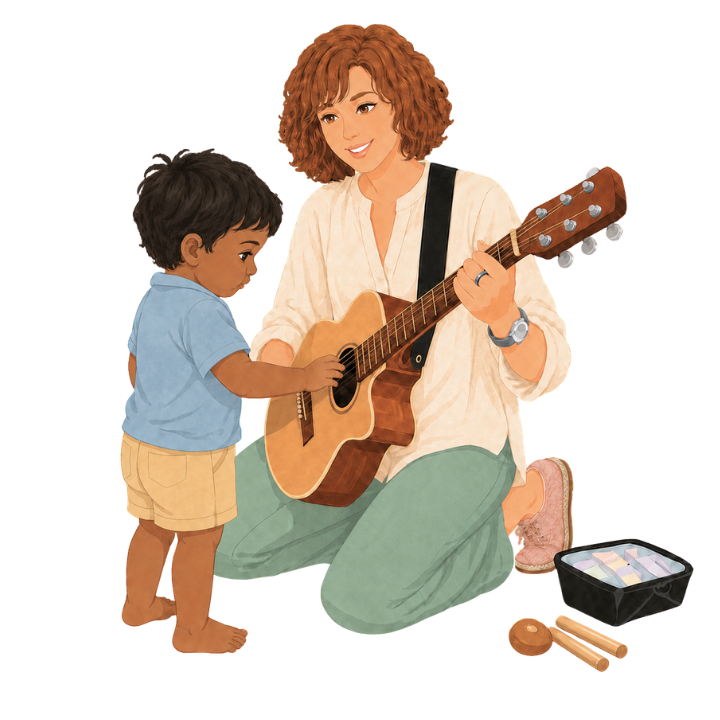
One child or siblings
In-Home Music
A familiar, low-pressure setting with space to follow one child closely, repeat favourites, explore instruments and let the session move at their pace.
Explore In-Home MusicLive music, movement and shared listening with room for choice, repetition and the child’s own way of joining.
A child may sing, play, dance, watch closely, choose the same song again or stay nearby until they are ready. I prepare the musical space; the child helps shape what happens inside it.
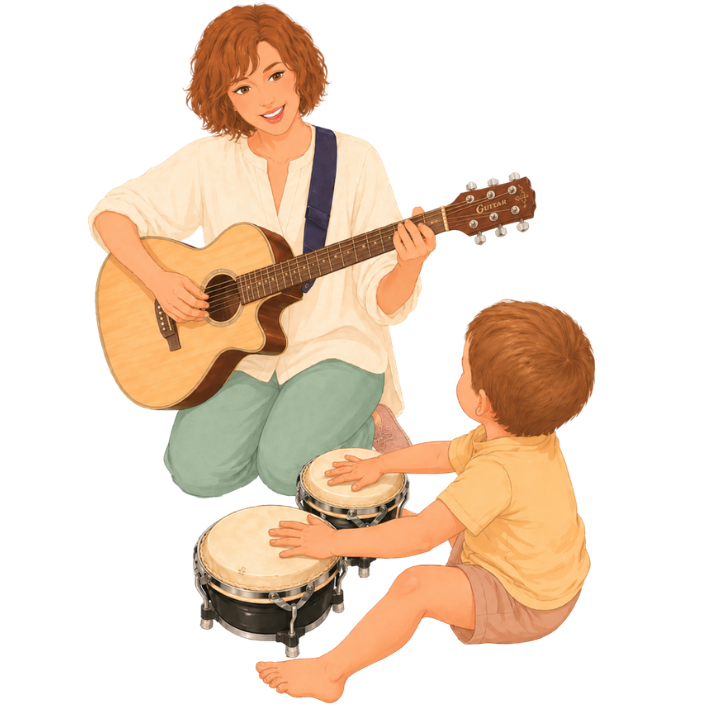
Before a young child can explain what they enjoy, they can lean closer, repeat a rhythm, reach for an instrument or choose the same song card again.
A hand goes straight back to a familiar card. Repetition tells me what has caught the child’s attention and gives them another chance to join in.
Feet tap, shoulders bounce or a hand finds the drum. The body can meet rhythm before anyone asks for a formal response.
A reach, glance, sign or pause can become part of the musical conversation, even when spoken language is still emerging.
The last vibration of a chime fades and a child waits for it. Not every musical moment needs to be filled with sound.
The musical approach stays the same. What changes is the size of the social space around the child.
A familiar, low-pressure setting with space to follow one child closely, repeat favourites, explore instruments and let the session move at their pace.
Explore In-Home Music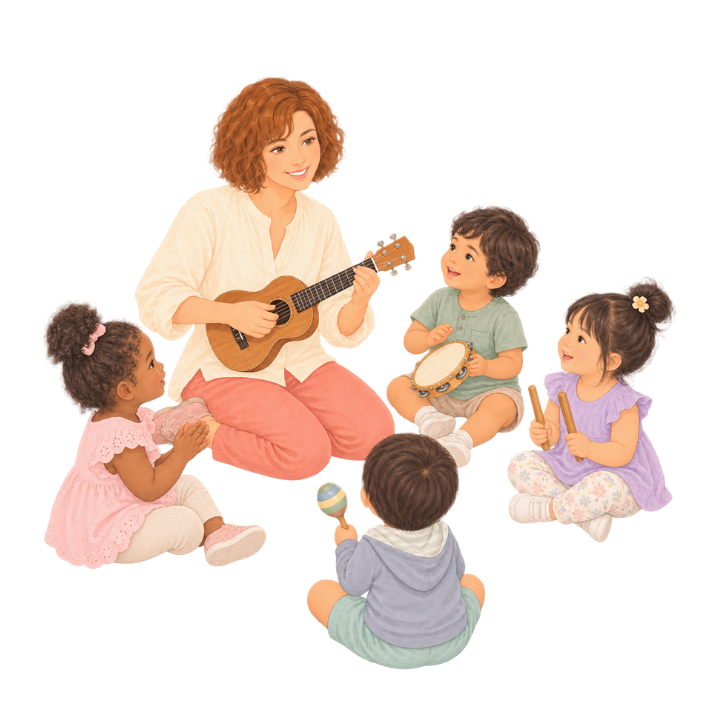
A shared musical space where children can notice one another, move together, listen, choose songs and influence the direction of the group.
Explore Music CirclesChoice is easier to understand when a child can see what is available.
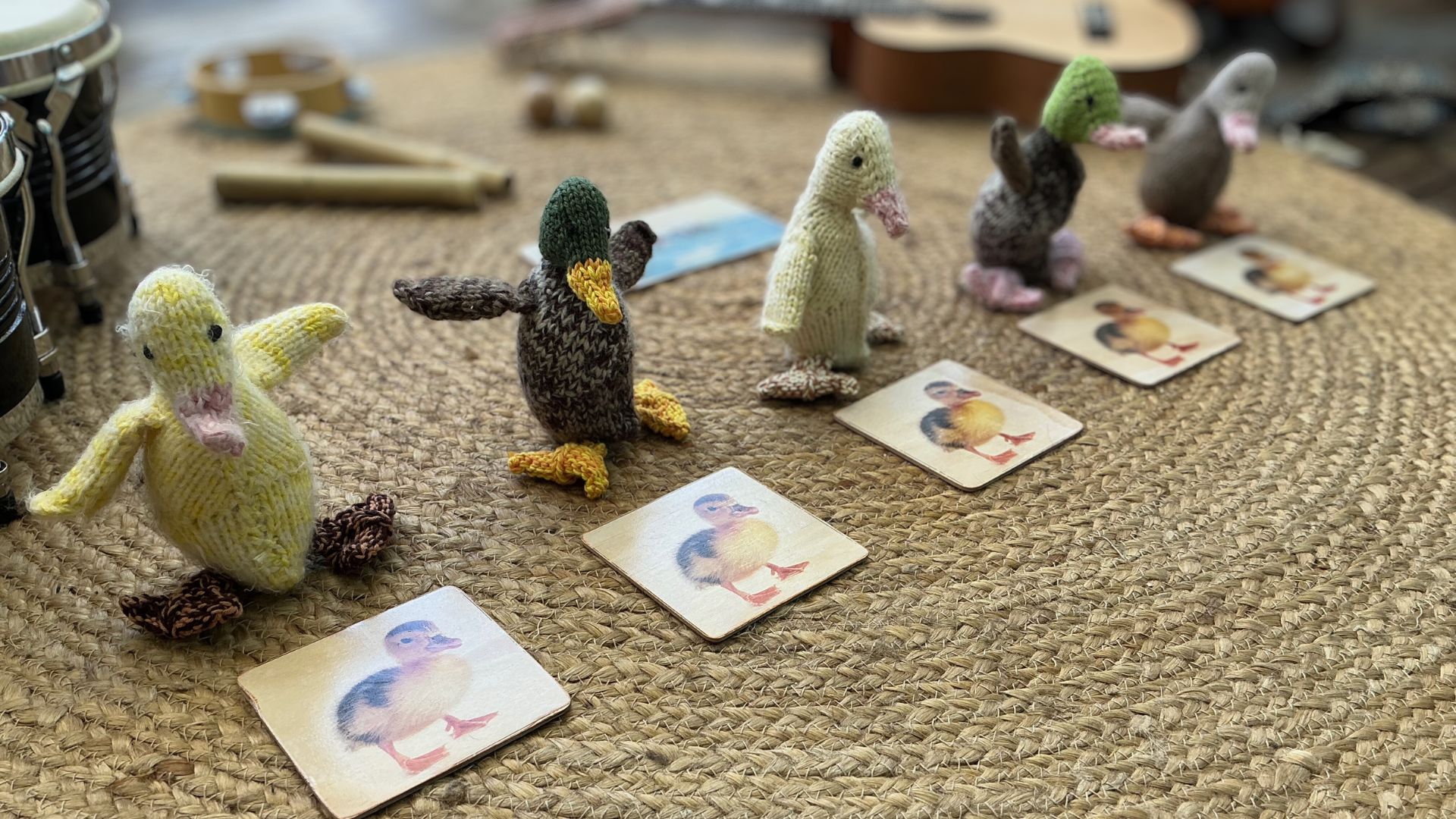
Photographic song cards, familiar props and visible instruments make the possibilities concrete. Sometimes the choice is a card. Sometimes it is the drum already within reach. A child can ask for a favourite again, join through movement or simply watch until they are ready.
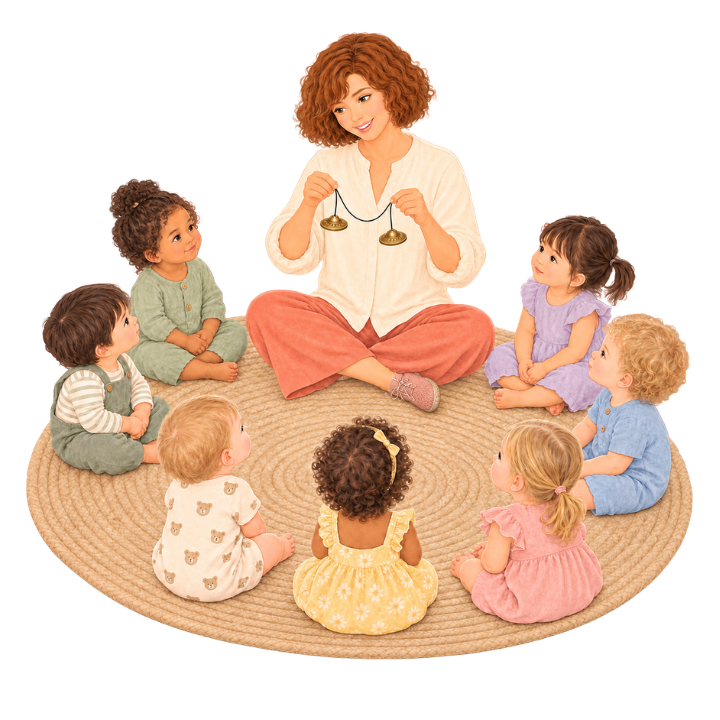
A familiar sequence helps children know where they are. Within that structure there is room for the group or child to influence what happens next.
Gather. A familiar opening brings us into the musical space together.
Listen and breathe. We hear the tingsha chime, take a slow breath, and listen as the sound fades.
Choose. Song cards and visible materials give children a genuine way to influence what comes next.
Play and move. Guitar, ukulele, percussion, voice and movement expand from the choices in front of us.
Close. A recognisable ending lets the musical experience feel complete.
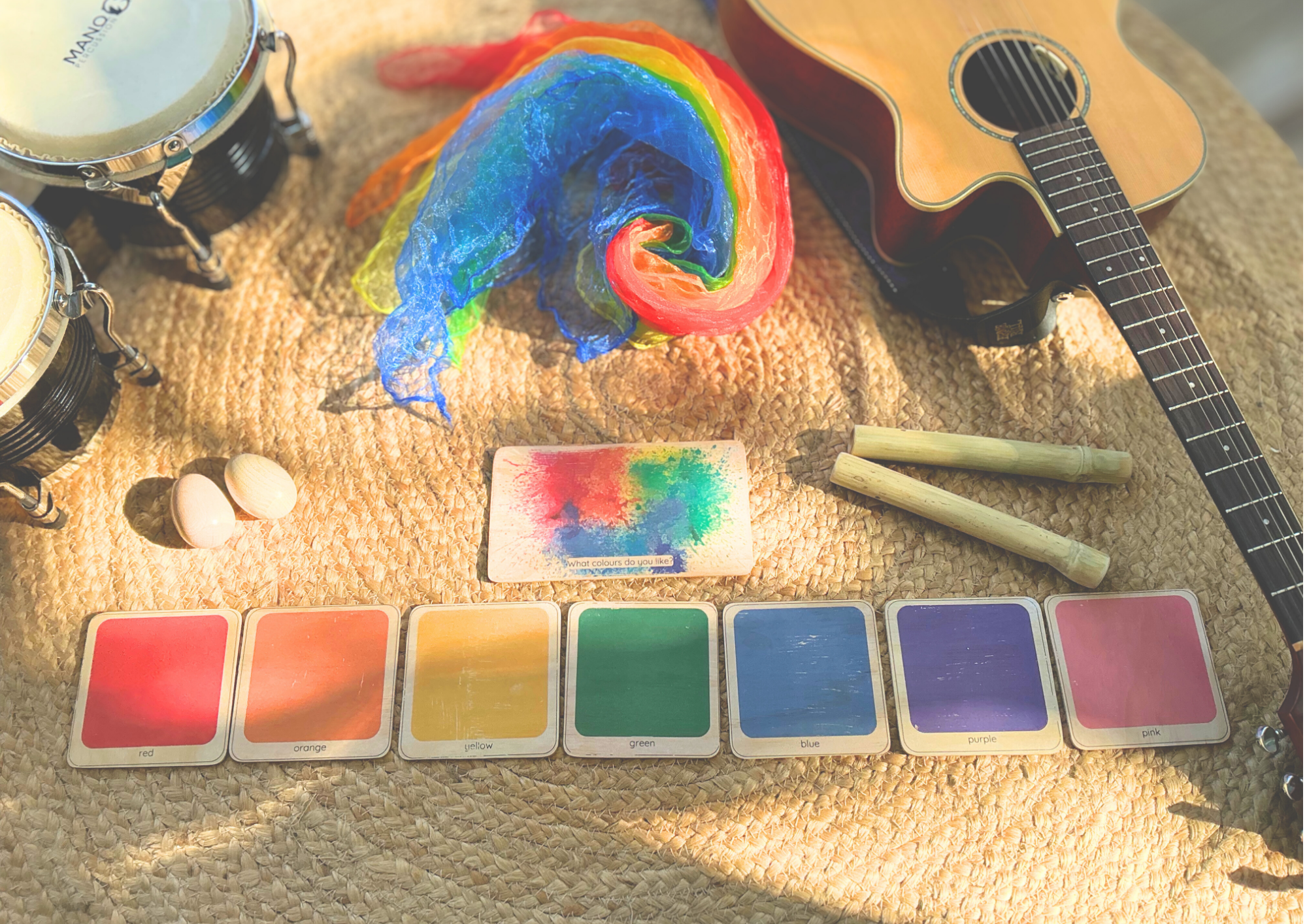
The materials change with the child, the group and the musical idea. The musical approach draws from Kodály, Orff and Dalcroze alongside Montessori principles of observation, choice and active participation. I use what fits the musical moment rather than asking the child to fit a method.
There is no rush from one stage to the next. Familiar songs, movement and repetition remain useful while increasingly conscious musical ideas become available as the child is ready for them.
A baby or young toddler may first meet music through voice, body movement, repeated sounds, shared attention and the pleasure of listening together.
Voice · listening · movement · pulse · imitationAs children become more active participants, they can choose, anticipate, repeat, move deliberately and begin adding their own gestures, rhythms and musical ideas.
Beat · choice · repetition · gesture · languageOlder children can make musical relationships increasingly explicit through rhythmic language, solfa, pattern, ensemble playing and simple composition.
Pitch · rhythm · solfa · pattern · ensemble · compositionI was a Montessori child myself, so Montessori was part of my life long before it became my profession. I have spent more than 13 years working in early childhood and Montessori environments across Thailand, the UK and Australia, alongside more than 15 years teaching through music.
I hold a First Class BA (Hons) in Montessori Early Childhood Studies. My final research explored the relationship between music, movement and early childhood development, something I had already been noticing with children for years.
Montemusic grew from bringing those worlds together.
BA (Hons) Montessori Early Childhood Studies, First Class · Blue Card · Public liability and professional indemnity insured
“I have seen Kym at work with children and observed someone who cares deeply about children’s well-being and who is also genuinely passionate about education. Kym is a joyful, enthusiastic and multi-skilled music educator of young children.”
Ian Ross WilliamsMusic Educator & Songwriter
If you are unsure whether home or a small circle would suit best, you do not need to decide before you enquire.