


A daily moment needs support.
A familiar part of the day may be asking more of everyone than it should. We look closely at what is happening around the child, then make one thoughtful change at a time.
Mornings · Transitions · Mealtimes · Bedtime
Professional Montessori guidance that begins with your child, your family and the life already happening at home.
Sometimes that begins with a routine that has become difficult. Sometimes with a baby beginning to move, a toddler who wants to pour their own drink, or a child suddenly fascinated by letters, numbers or how things work.
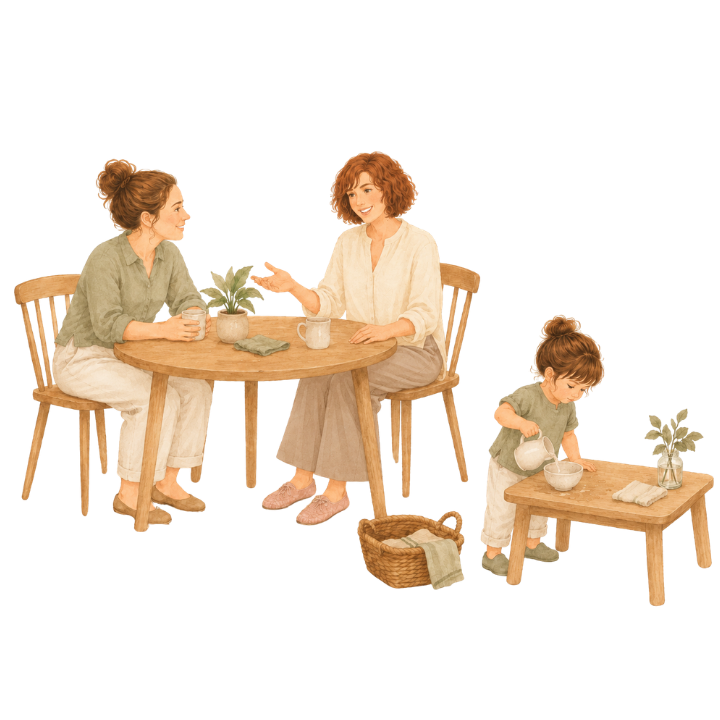
The Prepared Home is $500 per week. The service is designed around roughly two to three weeks of support, adjusted to what we are changing or preparing for.
You begin with one week. Most weeks include two to three home visits of around 60–90 minutes. We agree the plan before the week begins, then adjust the rhythm as the work unfolds, leaving enough space between visits for your family to practise without me there.
You may want support around a daily moment, or guidance as your child becomes ready for something new. Both belong to the same Montessori practice.
A familiar part of the day may be asking more of everyone than it should. We look closely at what is happening around the child, then make one thoughtful change at a time.
Mornings · Transitions · Mealtimes · Bedtime
Interest is gathering. Your child may be reaching, carrying, pouring, asking to help, listening for sounds, or showing a new pull towards language and number.
Movement · Self-feeding · Dressing · Helping
Both begin with observation.
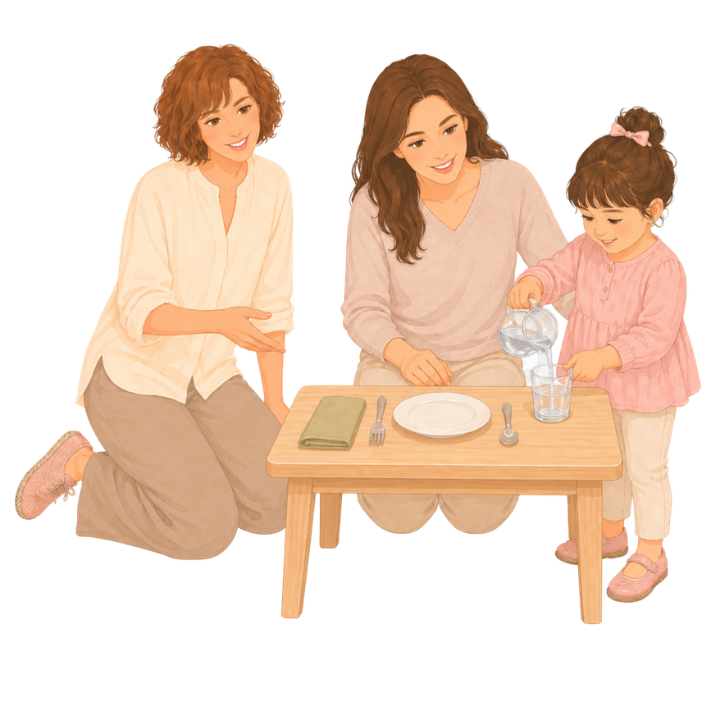
The professional work is knowing what to notice, what to prepare, what to present and how much help to give.
The child, their interests, movement, concentration, communication and the rhythm of family life.
Access, sequence, tools, materials and spaces so the child can take a meaningful part.
Purposeful work slowly and precisely, with as much language and help as the moment needs.
Parents learn when to show, help, wait, repeat, hold a boundary and step back.
The process begins in relationship, then moves into observation, preparation and practice. We extend only when the child and family are ready.
Music is often our first place to meet: peaceful, familiar and low-pressure. If your child is already deeply engaged elsewhere, I can begin there instead.
I notice interests, movement, communication, concentration, routines and what is already working in the home.
We choose a useful focus and adapt the environment, material or sequence around the child and family.
I present purposeful work carefully, then support the parent to offer it with the right amount of help.
We keep what is useful, remove what adds work, and follow the child into the next area when they are ready.
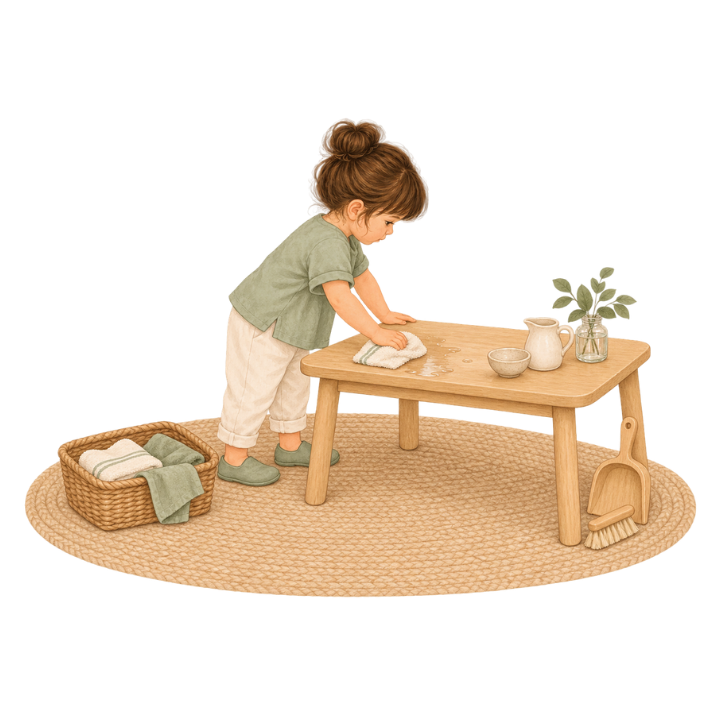
Practical Life forms the foundation because it already belongs to family life.
Washing, carrying, pouring, wiping, dressing, serving, folding and caring for the home are not imitation activities. The child’s work changes something in the shared environment.
The age ranges are guides, not boxes. What matters is the child’s developing ability, interest and need for repetition. Participation begins long before every step can be completed independently.
Watching · Reaching · Rolling · Voice
Voice, touch, floor movement, simple objects, care routines and familiar rituals create the first prepared environment.
Crawling · Carrying · Posting · Pushing
One meaningful step can become part of a longer routine: carrying an object, placing a plate, washing hands or pushing in a chair.
“I do it” · Pouring · Dressing · Washing
Food preparation, toileting, sweeping, watering and the full cycle of use and return become increasingly meaningful work.
Questions · Letters · Number · Precision
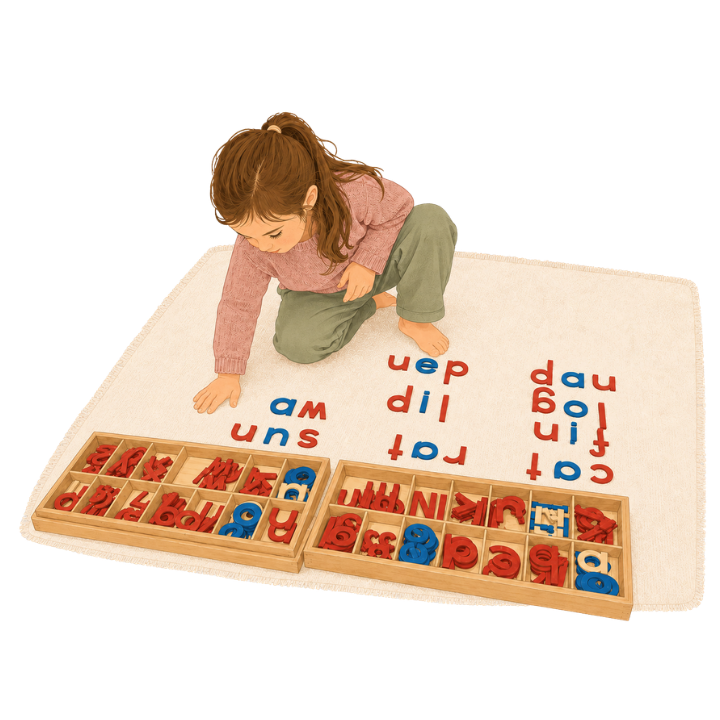
Practical Life remains central as interests extend into Sensorial, Language, Mathematics, creativity and the wider world.
As your child’s interests develop, the work can grow with them into language, mathematics, sensorial exploration, creativity, music and knowledge of the world.
Practical Life remains the foundation. From there, the work can expand into:
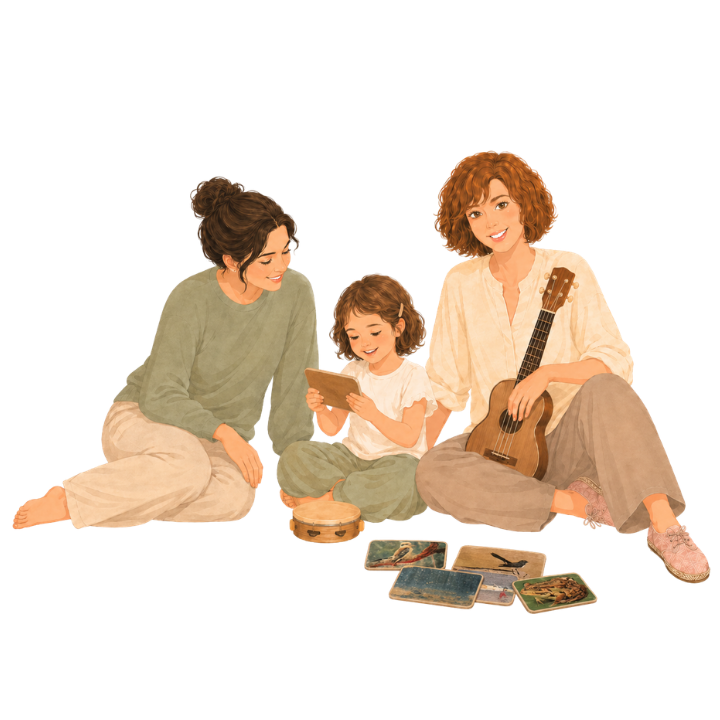
Shared music usually gives your child and me a peaceful, low-pressure way to meet, play and get to know one another before I ask anything of them.
My research into music in the early years is one reason it sits at the beginning of my practice. Shared music gives us something enjoyable to do together without asking the child to perform, while supporting language, movement, memory, regulation and bonding.
While we play, I notice what your child returns to, how they communicate a choice, whether they watch before joining, what they repeat and when they need more space. If something else already has their attention, I can follow that instead. Relationship comes before interpretation.
The principle matters more than the aesthetic.
You do not need to turn your home into a Montessori classroom or replace everything your child owns.
We begin with what is already there. Real utensils, household objects, natural materials and existing furniture often do the work beautifully. Where an authentic Montessori material genuinely serves the child, I can help you choose one with purpose.
Use what already works.
Adapt where the purpose can be preserved.
Recommend only when a material genuinely adds something.
The Prepared Home is Montessori-informed educational and developmental guidance. It does not provide diagnosis, therapy, medical treatment or crisis support. Where another kind of professional support is needed, referral matters.
It might be a difficult part of the day. It might be a new interest, ability or stage you want to prepare for thoughtfully. You do not need to know the solution before you enquire.